
Carbon Fiber Motorcycle Parts: A Complete Guide
Key takeaways
- Carbon fiber's appeal is its strength-to-weight ratio: roughly 2,457 kN·m/kg versus 254 for steel alloy, so parts shed weight without going fragile (Christine DeMerchant, 2026).
- A plain-weave carbon laminate carries a stiffness-to-weight ratio about 60% greater than aluminum, which is why fairings and covers can be thin yet rigid (DragonPlate, 2026).
- The weave you see is mostly cosmetic. Twill (the 2×2 checkerboard) hides contours better; plain weave looks more uniform. Resin quality and clear-coat matter more than the pattern.
- In humid, sunny Malaysia the resin and clear coat degrade, not the fibers. Keep parts out of constant UV, wash off salt and grime, and reseal faded clear coat.
- Match carbon upgrades to your actual riding goal. On a street bike the gains are mostly looks and small weight savings, so prioritize parts you will see and touch.
Carbon fiber motorcycle parts are prized for one simple reason: they deliver high strength at very low weight, with a finish most riders find hard to resist. Whether a carbon fairing or tank cover is worth it depends on your bike and your goals, and this guide walks through the real trade-offs so you can decide before you spend.
Carbon fiber is a cloth of woven carbon strands set in resin, then cured hard. The result is a panel that can be thinner and lighter than plastic or aluminum while staying rigid. That mix of lightness, stiffness, and the distinctive woven look is what keeps these parts near the top of most upgrade wish lists.
Why Is Carbon Fiber Prized for Weight and Looks?
Carbon fiber wins on strength-to-weight. Independent material data puts its specific strength at roughly 2,457 kN·m/kg, against about 254 for steel alloy and 222 for aluminium alloy (Christine DeMerchant, 2026). In plain terms, you can cut weight without the part turning flimsy.
Stiffness tells a similar story. A plain-weave carbon laminate carries a stiffness-to-weight ratio about 60% greater than aluminum, so a panel can stay thin and still resist flexing (DragonPlate, What is Carbon Fiber, 2026). For a motorcycle, less weight high up or at the extremities helps the bike feel lighter on turn-in.
Then there is the look. The woven surface under clear coat reads as serious and purposeful, and it signals a bike that has been cared for. Many riders buy carbon first for that finish and treat the weight savings as a bonus. On a street bike, that order of priorities is honest.
What Are the Most Common Carbon Fiber Motorcycle Parts?
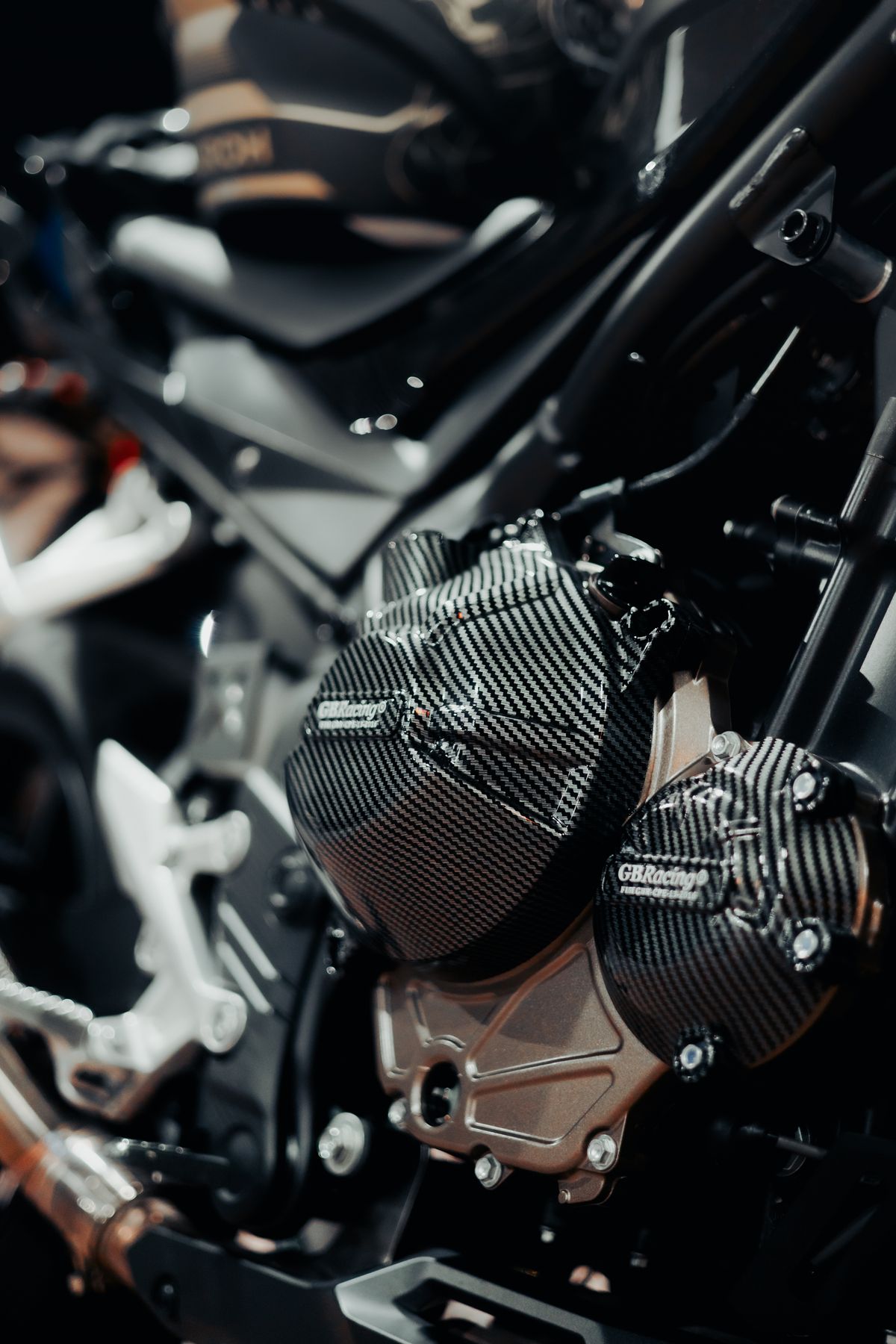
The parts riders buy most are the ones they see and touch: fairings, fenders, and tank covers. These are cosmetic or semi-structural panels where carbon's thin, rigid build and woven finish do their best work without carrying crash loads.
Fairings are the large side and nose panels. Swapping heavy plastic or painted panels for carbon trims weight and sharpens the bike's look, though full fairing sets are the priciest route. Front and rear fenders (mudguards) are smaller, cheaper, and a popular first upgrade because the change is visible straight away.
Tank covers and tank sliders sit where your knees grip, so the finish stays in view on every ride. Beyond these, common carbon parts include heel guards, chain guards, cowls, and small trim pieces. If you want the look without a full rebuild, start with a fender or tank pad.
Twill vs Plain Weave: What Are the Quality Indicators?
The weave is mostly cosmetic, so judge quality by the resin and finish, not the pattern. Twill weave uses a 2×2 over-under sequence that forms a diagonal checkerboard and drapes neatly over curves. Plain weave uses a tighter 1×1 grid that looks flatter and more uniform. Both can be excellent or poor depending on how the part is made.
What actually separates good from bad is underneath the surface. Carbon fiber is extremely strong in its raw form, with tensile strength around 4,127 MPa, but in a real laminate that figure drops to roughly 1,600 MPa because the resin, not the fiber, now carries much of the load (Christine DeMerchant, Carbon Characteristics, 2026). Poor resin and voids are where cheap parts fail.
Look for these quality signs:
- A weave that stays straight and even, with no warped or stretched squares around curves.
- A deep, glassy clear coat with no cloudy patches, orange-peel texture, or dry spots.
- Clean, finished edges rather than frayed or rough cut lines.
- Consistent color and no visible air bubbles trapped under the surface.
A cheap part often gives itself away at the edges and in the clear coat long before anything structural shows.
How Do You Care for Carbon Parts in Humid Climates?
In Malaysia the fibers are not your problem, the finish is. Carbon strands resist UV well, but the epoxy resin and clear coat on top can yellow and dull under constant sun, and high humidity plus heat speed that up. Good care is mostly about protecting that outer layer.
A simple routine keeps parts looking new:
- Wash with pH-neutral soap, warm water, and a soft microfiber cloth. Skip abrasive pads.
- Avoid petrol, brake cleaner, and strong solvents near carbon. They can haze or soften the clear coat.
- Dry fully and park in shade or under a cover when you can, to limit UV and trapped moisture.
- Apply a non-abrasive wax or a dedicated clear-coat sealant every few months for UV protection.
If a part has already gone slightly yellow or dull, a light polish and a fresh UV-stable sealant often revive it. Badly degraded clear coat may need professional re-clearing. The same careful, non-abrasive habits that protect a carbon tank cover also apply to finishes elsewhere on the bike, much like the routine in our exhaust maintenance tips.
How Do You Match Carbon Upgrades to Your Build?
Match the upgrade to how you actually ride. On a track or race bike, every gram counts, so lightweight carbon panels and covers earn their price. On a street bike, the weight savings are smaller in feel, and the real payoff is the look and finish, so spend where you will see and touch the result.
Think about priorities in order:
- Street and show builds: start with visible parts like fenders, tank covers, and cowls. Big visual change, moderate cost.
- Spirited road and occasional track: add fairing panels and heel guards once the basics look right.
- Dedicated track bikes: prioritize full lightweight panels where rules allow, since weight savings matter most here.
Also match the weave and finish to the rest of the bike. A twill tank cover next to a plain-weave fender can look mismatched up close, so keep the pattern consistent across parts you fit together. Buying from a supplier who stocks matched, quality-checked carbon, such as Motovation-frgs, makes it easier to keep a build looking coherent. For how we vet what we stock, see why riders shop premium parts with Motovation-frgs.
The smartest next step is to pick one visible part, a front fender or a tank cover, and judge the finish in person before committing to a full set. One well-made piece tells you more about a supplier's quality than any spec sheet, and it gives your build a clear direction to grow from.
Frequently asked questions
Are carbon fiber motorcycle parts worth it?
For track and race use the weight savings are meaningful. For street riding the benefit is mostly aesthetics and small reductions in unsprung or rotating weight, so judge the price against the look and finish you want.
What is the difference between twill and plain weave carbon fiber?
Twill uses a 2×2 over-under pattern that forms a diagonal checkerboard and drapes over curves cleanly. Plain weave is a tighter 1×1 grid that looks more uniform and flat. The choice is cosmetic once the part is properly made.
Do carbon fiber parts fade in the sun?
The carbon fibers themselves resist UV, but the epoxy resin and clear coat on top can yellow and dull with constant sun exposure. Parking in shade and keeping the clear coat intact prevents most of the visible fading.
How do I clean carbon fiber motorcycle parts?
Use pH-neutral soap, warm water, and a soft microfiber cloth. Avoid abrasive pads, strong solvents, and petrol, which can attack the clear coat. A non-abrasive wax or dedicated clear-coat sealant adds UV protection.
Is carbon fiber stronger than steel?
By weight, yes. Carbon fiber has a far higher strength-to-weight ratio than steel, though a thin cosmetic panel is not built to take impacts the way a structural steel part is. Treat body panels as finish parts, not crash protection.